Attention Deficit Hyperactivity Disorder (ADHD) and autism are among the most frequently discussed neurological conditions in children today. Countless books, articles, and internet resources describe the signs of these conditions. However, the question of what truly underlies them remains without a definitive answer.
The most valuable guide in recognizing these conditions is often a parent's intuition. The bond between a child and a parent is far deeper than any diagnostic system. Parents sense when difficulties with concentration, attention, or behavior are not the result of stubbornness, selfishness, or a lack of willingness to cooperate. They know that behind a child's behavior often lies something much deeper.
Neither diagnostic criteria nor evaluations by teachers, specialists, or others can fully replace the intuition of the person who knows the child best. It is this intuition that often first recognizes that a child is facing challenges beyond the usual developmental stages.
Today, tens of millions of children worldwide live with ADHD or autism, and their numbers continue to grow. For many families, this means daily challenges, confusion, and often a lack of sufficiently clear answers. At the same time, these conditions also affect many adults who continue to seek explanations for their own experiences.
Understanding ADHD and autism requires looking beyond traditional theories and considering possibilities that have not yet received sufficient attention.
The Hidden Upsides of ADHD and Autism
Most people associate ADHD and autism with difficulties in concentration, impulsivity, hyperactivity, or challenges in communication. In reality, these conditions encompass much more than that.
When problems with attention, hyperactivity, and impulsivity are pronounced enough to hinder a child's daily functioning at school, home, or in a social environment, an ADHD diagnosis is usually made. When symptoms manifest in a more complex and profound way, they often fall within the autism spectrum.
Modern medicine tends to classify people into a limited number of categories and labels. Thus, complex individual experiences are reduced to a few diagnoses that create a sense of clarity and understanding. In reality, however, ADHD and autism represent much more complex conditions than these definitions allow. Anthony William believes that diagnoses often obscure the deeper causes and meaning of these conditions.
Besides the challenges, ADHD and autism are often associated with qualities that rarely receive enough attention.
Many children with ADHD or autism possess highly developed intuition, exceptional creativity, and an ability to notice things that remain hidden from others. They often perceive the world differently and can read people and situations much better than is assumed.
These children often think quickly, feel deeply, and process information in a way that differs from traditional learning and communication models. They frequently show artistic talent, imagination, and an ability to see solutions where others only see problems.
In many cases, the reluctance to follow established rules and standards is not a shortcoming, but an expression of a different way of thinking and perceiving the world.
From this perspective, ADHD and autism are part of the emergence of new generations of children who will be better prepared to cope with the challenges of the future and find new solutions to complex problems.
Difference undoubtedly brings difficulties for both the children themselves and their families. But it is precisely this difference that can also become a source of extraordinary abilities and opportunities for development.
What Causes ADHD and Autism According to the Medical Medium
One popular theory in recent years is that ADHD and autism are due to disturbances in the gut environment. According to this hypothesis, candida overgrowth, yeasts, molds, and unfavorable bacteria affect children's behavior and lead to symptoms such as hyperactivity, impulsivity, distractibility, or difficulties in social interaction. According to the Medical Medium's information, this theory distracts from the actual cause.
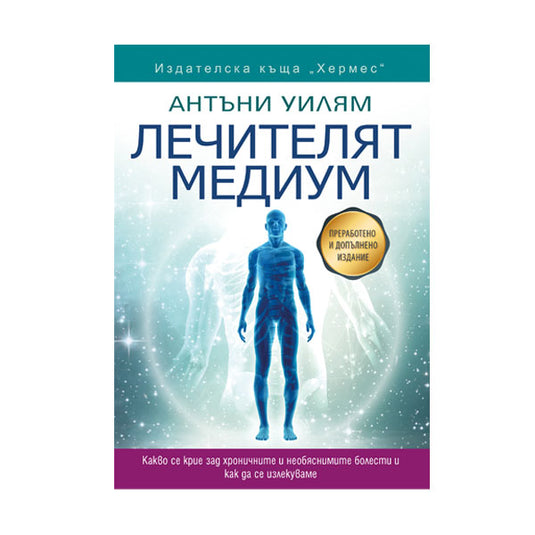
Improving the condition of the digestive system can be beneficial for overall health. However, according to this information, probiotics and foods rich in beneficial microorganisms do not affect the main factor behind ADHD and autism. In his book “Medical Medium – Revised and Expanded Edition”, Anthony William reveals the true cause behind these conditions, namely – toxic heavy metals.
Specifically, it's primarily about mercury, combined with aluminum, accumulating in certain areas of the brain. Besides the central brain canal, these metals can also be present as smaller deposits in various parts of the brain, including areas related to emotions. You can learn more about heavy metals in the article “Pests That Make Us Sick – Toxic Heavy Metals”.
At first glance, it might seem difficult for a small child to accumulate significant amounts of toxic metals in a short period of their life. However, according to the Medical Medium's information, mercury often goes unnoticed and can be passed down from generation to generation.
Many parents already carry accumulated toxic heavy metals, which they, in turn, inherited from their own parents. Without targeted action to remove them from the body, these metals can be passed down the family line for decades.
According to the Medical Medium, genetics is not the cause of ADHD and autism. What is often perceived as heredity actually represents the transmission of toxic heavy metals and similar patterns of toxin exposure within the family.
Besides mercury, aluminum also plays an important role. It can also be passed down between generations and enter the body through various environmental sources. These include aluminum packaging, kitchen utensils, building materials, pesticides, fungicides, herbicides, and other widespread products.
Another toxic metal often present in the body is copper. Although, according to this information, it is not a direct cause of ADHD and autism symptoms, its accumulation can contribute to other conditions such as eczema, psoriasis, and various skin problems, which further increase the physical and emotional burden on the child.
According to the Medical Medium, the key factor is not just the presence of toxic heavy metals, but also where they accumulate in the brain. This largely determines how symptoms manifest and the individual characteristics of each child. This is precisely what the next part of the article will focus on.
Look forward to the second part of the article, “Which Part of the Brain Is Responsible for ADHD and Autism According to the Medical Medium,” coming soon.
*This article is based on materials from Anthony William's book – “Medical Medium – Revised and Expanded Edition”